
July 24, 2026
Why Character Portrayal Changes When Voice Actors or Language Versions Are Different
A character may seem restrained in one language, aggressive in another, and noticeably younger after being recast. These differences are easy to attribute entirely to the voice actor, but a dubbed performance is created through several connected stages. Translation determines what the character says. Adaptation reshapes that dialogue for the target language and available screen time. The dubbing director establishes the overall interpretation, the actor performs it, and the sound team decides how prominently that performance sits within the finished soundtrack.
The result is not a simple replacement of one voice with another. It is a new performance built to fit an existing image.
Netflix describes dubbing as a production process involving contextual understanding, natural target-language phrasing, accurate synchronization, authentic acting, and the integration of new dialogue with the original soundtrack. Its guidelines also recognize that exact vocal similarity is not always the main priority; a convincing performance may matter more when both goals cannot be achieved simultaneously. citeturn283143view3
A fair comparison therefore begins by identifying which part of the experience has changed. The words may be different even when the acting follows the same intention. The actor may use a new emotional approach while reading a relatively faithful script. The dialogue may also sound unusually forceful because it has been mixed louder than the surrounding music and effects.
Separating those influences makes it easier to understand why one version feels different without immediately declaring it inaccurate or inferior.
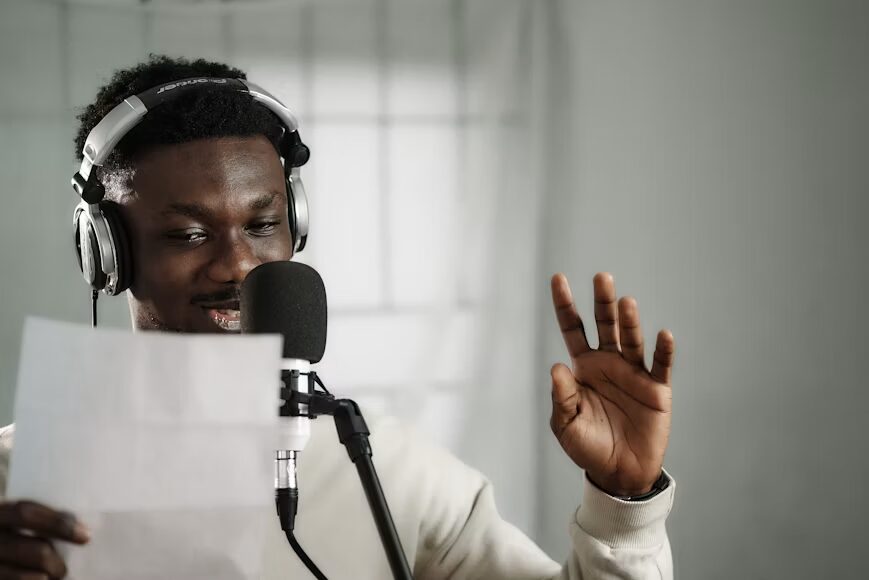
Vocal Qualities Shape the Character Before the Words Are Considered
Pitch, timbre, breathing, pace, articulation, and emotional intensity all affect the personality audiences hear.
A higher voice can make an adult character appear younger, more anxious, or more energetic. A lower register may suggest authority, fatigue, emotional distance, or age. Neither interpretation is automatically more faithful. The effect depends on how the voice fits the character’s appearance, behavior, history, and relationships.
Breathing makes an equally strong difference. Short, audible breaths can create nervousness or physical strain. Longer pauses may suggest confidence, calculation, or suppressed emotion. An actor who speaks quickly can make the character appear impulsive, intelligent, impatient, or defensive, while slower delivery may feel thoughtful or threatening.
Emotional intensity changes the impression even when two actors emphasize the same sentence. One may deliver anger through raised volume and sharp consonants. Another may lower the voice and allow the threat to emerge through restraint. The plot information remains unchanged, but the audience receives a different understanding of how the character handles conflict.
Netflix’s casting guidance asks dubbing teams to consider relevant vocal age and other characteristics while seeking a natural match. At the same time, it allows performance to take priority over exact voice matching when the two cannot be achieved together. Its acting guidance also emphasizes energy, dynamics, projection, breaths, and physical behavior rather than treating lip movement as the only requirement. citeturn283143view1turn283143view3
This helps explain why a replacement actor within the same language can change a character as much as an international dub. The new performer may have a different natural register or place emphasis on another part of the personality. A long-running hero previously played with youthful enthusiasm may sound more mature after a recast, even when the new actor deliberately preserves familiar catchphrases and speech patterns.
Familiarity can exaggerate the perceived difference. After hearing one voice for several seasons, viewers begin to associate its rhythm and emotional habits with the character. A new actor may initially sound wrong simply because the audience can predict how the former performer would have delivered each line.
A better comparison uses several kinds of scenes. Listen to an ordinary conversation, a comedic exchange, a quiet emotional moment, and a scene involving fear or anger. Short clips of screams, jokes, or catchphrases reveal vocal contrast, but they rarely show whether an actor maintains a coherent interpretation across the full role.
Localization Can Alter Politeness, Humor, and Social Distance
A character’s apparent personality may change before recording begins because languages do not organize social meaning in the same way.
Forms of address, honorifics, pronouns, verb endings, insults, regional speech, and levels of politeness can indicate age, hierarchy, intimacy, or hostility in the original. A target language may not have a direct equivalent, so the adaptation must communicate those relationships through different vocabulary, sentence structure, tone, or context.
A character who consistently uses formal speech may appear respectful, distant, timid, or calculating. When that formality disappears in translation, the same character can seem friendlier or more direct. The opposite can happen when a localization uses complete, carefully structured sentences for dialogue that originally sounded casual.
Terms of address present a similar problem. A character may alternate between a surname, title, nickname, and first name to signal changes in closeness. Replacing all of them with one name can make a relationship feel static. Preserving every original honorific, however, may sound unnatural or unclear to an audience unfamiliar with the convention.
Insults and profanity also carry different levels of force across languages. A literal dictionary equivalent can be much harsher or weaker in the target culture. Netflix’s English-language dubbing guidelines call for dialogue, including profanity, to remain faithful to the original intention without introducing a level of obscenity that was not present or unnecessarily softening the material, subject to local law. citeturn283143view1
Humor often requires even more adaptation. Puns, rhymes, mispronunciations, idioms, and cultural references may have no direct equivalent. The adapter may replace the wording while trying to preserve the reason the moment is funny. A literal version can retain the original information but lose the joke, while a rewritten line may make the scene work naturally but give the character a different comic style.
Dialect choices can reshape background and status. A rural accent, class marker, or regional expression in the source may be replaced with neutral speech because using a target-language dialect could introduce unrelated stereotypes. Alternatively, the localization may assign another regional style to preserve the sense that the character comes from outside the social center.
The important comparison is not whether every word matches. It is whether the localized dialogue preserves the character’s function in the scene. Does the person still sound deferential to a superior? Is the joke still directed at the same target? Does a sudden change from formal to intimate speech remain visible? Does an insult carry roughly the intended emotional weight?
When subtitles and dubbed dialogue differ, that does not automatically prove that one is wrong. Subtitles must be readable within limited time and screen space, while dubbing must produce spoken lines that fit performance and synchronization requirements. They may therefore use different phrasing while representing the same underlying meaning.

The Screen Places Physical Limits on Dubbed Dialogue
Dubbing must sound natural while fitting images that were animated or filmed for another language. Sentence length, visible mouth movements, pauses, breathing points, facial expressions, and gestures all restrict the available wording.
Audiovisual translation research describes dubbing in terms of several kinds of synchronization. Content must remain consistent with the story, the voice must suit the visible character, and the dialogue must align with what the audience sees. Lip synchronization includes the beginning and end of speech, visible mouth shapes, and the relationship between perceived articulation and sound. citeturn540786view1turn540786view3
Languages rarely require the same amount of time to express an idea. A short phrase in the source may need a longer explanation in the target language. Another line may become much shorter. If the adapted sentence does not fit the visible speaking interval, the writer may have to condense it, expand it, change the word order, or select a different expression.
Research summarized by AIETI notes that matching sentence duration, often discussed as isochrony, can directly affect translation. When a line does not fit the available lip movements and silence, it may require reduction or additional explanation, with possible consequences for meaning. citeturn540786view3
Close-ups create the greatest pressure because mouth openings and closures are easy to see. Sounds formed with closed lips can restrict the available word choices at highly visible moments. A line spoken off screen offers more freedom because the adapter mainly needs to match duration, rhythm, and the surrounding sound.
The actor must then perform the revised sentence within that timing. A line may sound rushed not because the actor misunderstood the character, but because the target language needs more syllables to communicate the necessary information. A pause may disappear because the localized sentence occupies the entire visible speaking interval.
Netflix recommends using the image as the primary reference for synchronization. Its guidance states that dialogue should begin and end with the visible mouth movement and should also account for gestures and the physical behavior of the performer. It nevertheless places the original message and intention above perfect lip sync when both cannot be preserved. citeturn283143view1turn283143view3
Animation presents its own variation. Limited mouth movement can give adapters more freedom, while detailed close-up animation may demand precise timing. Games introduce branching dialogue, player-controlled pacing, repeated combat lines, and scenes that may need to work under several gameplay conditions.
These constraints explain why a dubbed sentence can be shorter, more direct, or structured differently from the subtitles. The difference should be evaluated in context. Does the adjusted line preserve the important information, relationship, and emotional purpose, or has synchronization removed something the viewer needs to understand?
Direction Determines Which Side of the Character Comes Forward
The dubbing director coordinates the interpretation across the script, casting, and performances. Even when the actor has a strong personal understanding of the role, the final delivery may reflect instructions about age, energy, restraint, comedy, pacing, and relationships with other characters.
One director may treat a villain as emotionally controlled, asking the actor to avoid obvious anger. Another may emphasize instability and encourage sharper changes in volume. Both performances can fit the same visible actions while leading audiences toward different readings.
Direction is particularly important in series recorded over long periods. Characters can sound inconsistent when early episodes are produced before the team fully understands their later development. Netflix recommends reviewing initial performances once the characters and overall tone have become more established and, where necessary, reconsidering or rerecording early material. It describes the dubbing director as responsible for maintaining a unified, authentic interpretation through casting, performance notes, script review, pickups, and final approval. citeturn283143view3
The recording environment can subtly affect delivery as well. Microphone placement, room acoustics, monitoring volume, and the way actors hear the scene can influence projection and intimacy. A performer recorded very close to the microphone may sound unusually present or confidential. A more distant recording can create a sense of space but may reduce smaller vocal details.
Those recordings still pass through editing and mixing before audiences hear them.
Mixing Can Make the Same Performance Feel Stronger or Colder
Dialogue level changes how forcefully a character enters the scene. A voice placed prominently above the soundtrack can seem more assertive, emotionally intense, or detached from the environment. A voice mixed lower into music, ambience, and sound effects may feel calmer, more natural, or less expressive even when the acting itself is similar.
The balance is not limited to volume. Equalization affects brightness and warmth. Compression can reduce differences between quiet and loud delivery. Reverb places the character in a room, street, hall, vehicle, or imagined space. Panning and perspective help indicate distance and movement.
Netflix’s mixing guidance says dubbed dialogue should be embedded naturally in the music-and-effects track rather than sounding as though it has been placed on top of the original production. It asks mixers to follow location, movement, perspective, and the approximate levels of the original version. citeturn283143view2
A close, dry voice in a large room can make the character feel separate from the scene. Excessively loud dialogue may turn a restrained performance into something that feels overstated. Too much compression can reduce the contrast between a whisper and an outburst, weakening the emotional progression.
The opposite problem also occurs. Dialogue mixed too quietly may hide breaths, hesitation, or softer emotional choices. Viewers may describe the character as cold when the details of the performance are simply difficult to hear beneath the soundtrack.
Different language versions can therefore create different impressions even when their actors make comparable choices. Recording quality, room treatment, vocal tone, and final balancing may place one version much closer to the listener.
A Practical Comparison Separates Script, Acting, and Sound
Use the same scene in each language and examine it in stages.
First, compare the meaning. Note changes in names, politeness, jokes, insults, information, and relationship cues. This identifies translation and localization differences.
Next, listen to the performance. Ignore the exact words temporarily and focus on pitch, pace, breathing, pauses, volume, and emotional intensity. This reveals what the actor and director are emphasizing.
Then examine the synchronization. Look for shortened phrases, rushed delivery, delayed starts, or altered pauses that correspond to visible mouth movement and scene length.
Finally, compare the mix through the same device and volume setting. Determine whether one voice sits farther forward, contains more room ambience, or competes differently with music and effects.
The same approach is useful when returning to a franchise after an anime break. Readers who continue with manga or light novels may form a personal sense of a character’s voice before a new season arrives. How to Continue With the Original Source Material Between Anime Seasons explains how to find the appropriate source point while managing spoilers and adaptation differences.
No language version can reproduce every linguistic and vocal feature of another. The useful question is whether each production preserves the character’s role, relationships, motivations, and emotional logic while sounding credible in its own language.
One version may emphasize vulnerability, another authority, and another humor. Those differences can result from deliberate interpretation, unavoidable linguistic constraints, or technical production choices. Once the script, performance, synchronization, direction, and mix are examined separately, the reason a character feels different usually becomes much clearer.